
Breeding characteristics
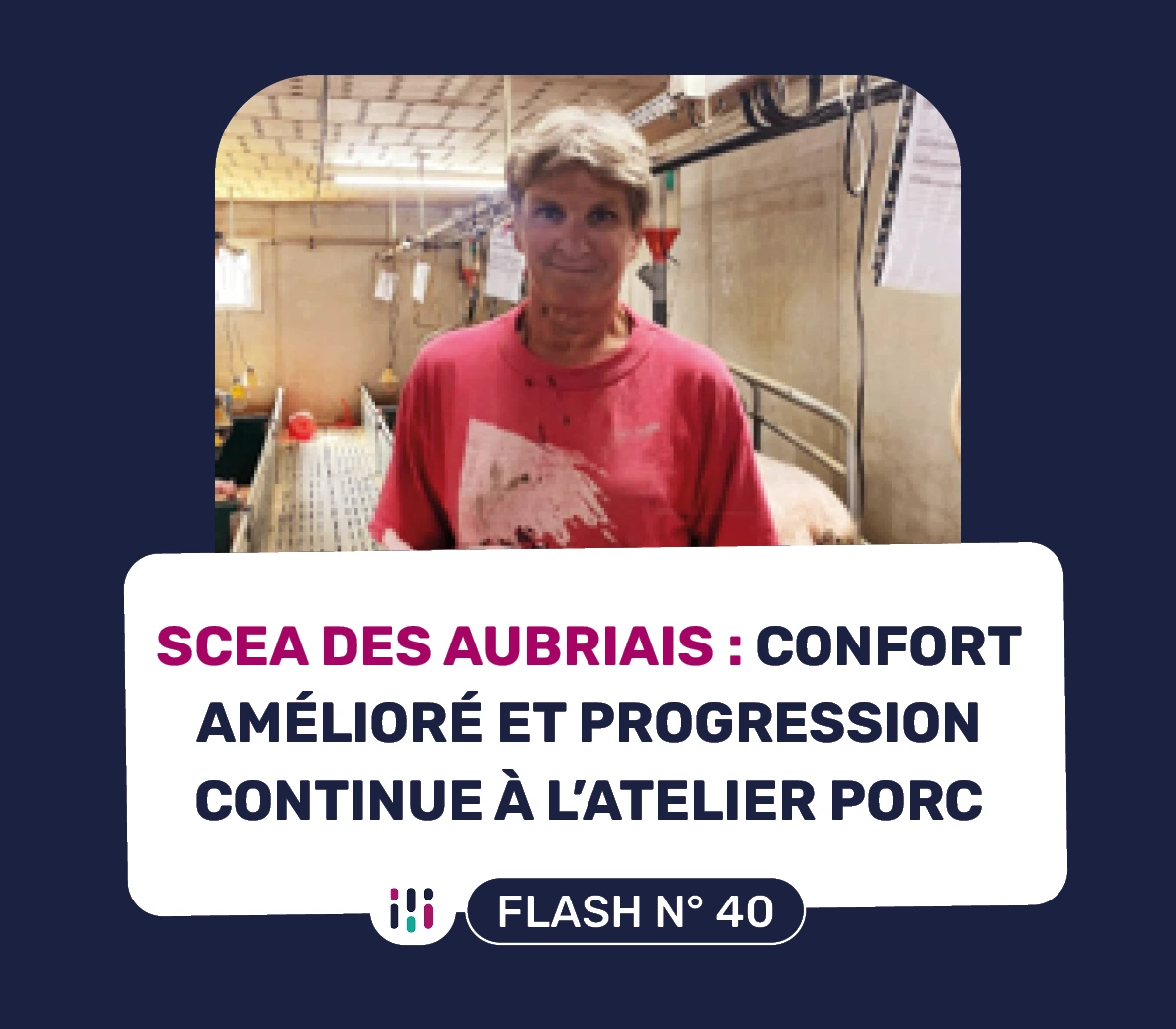
Séverine and Emmanuel ESNAUD, managers, Christine, employee
Naisseur-Engraisseur
Eureden member
Sow Youna, in transition Venus
Boar Valens (whole males since November 2023)
180 sows present
5 bands of 30 sows
Weaning 21 days
Key figures for the year
14.4 weaned per litter
Team testimonial
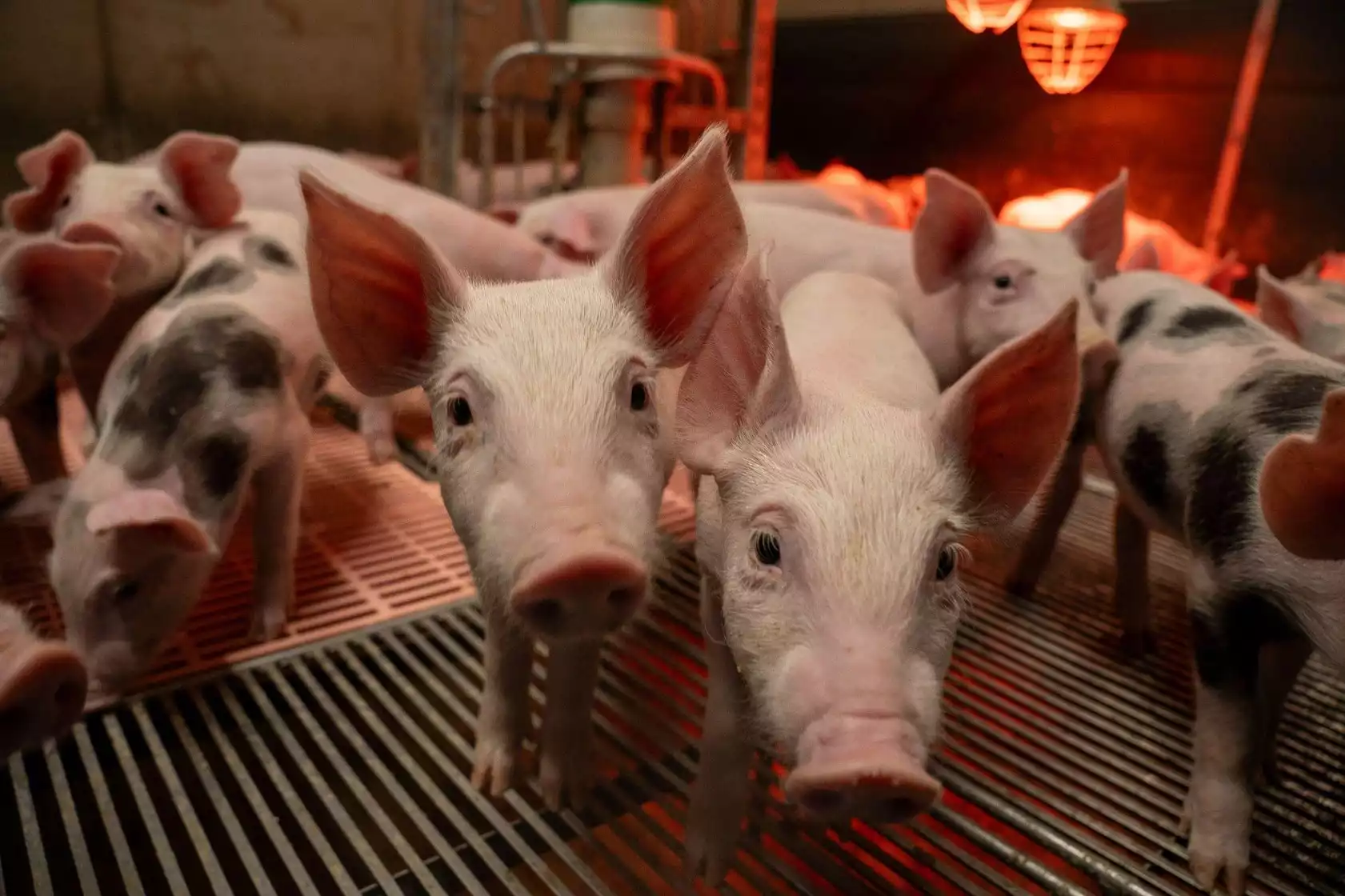
There are no nanny sows, and no artificial milk. Everything is weaned under the sows.
“The current gilts and Venuses are easy to handle, maternal and wean without any tricks, but always in strict compliance with health and our vaccination protocol.
The maternity building isn’t new, it’s standard boxes, and there are no nanny sows or artificial milk. Everything is weaned under the sows.
With our pre-weaning management, we have small-sized sows that are easy to manage and eat well. 95% of culled sows are chosen from the highest rows in the herd. I’m much more confident about the performance of my pig farm.
Séverine and Emmanuel ESNAUD, managers of SCEA des Aubriais (35)
Steadily increasing productivity since the Venus transit
| GTTT criteria | 2023 | First 4 months 2024 | 2024 |
|---|---|---|---|
| Live births/litter | 16,1 | 16,8 | 16,0 |
| Weaned / litter | 13,7 | 14,4 | 15,0 |
| Fertility rate (%) | 94,5 | 95,1 | – |
| Live-born loss rate (%) | – | – | 6,5 |
Expert opinion

Typhaine GAULTIER, Technical advisor to the Eureden pork group
“Emmanuel has a specific pre-group management system: strict age-weight gilt specifications on delivery, an entry-IA period of 15 to 19 weeks, and monthly gilt weighing. This enables the weight targets set at each stage to be met, and the feed to be supplemented on an individual basis if necessary. He has invested in places and monitoring to ensure that his gilts are small in size. The FAF feed on the sow workshop enables him to adapt the feed to each stage, with the quantity of feed not exceeding one tonne.
The watchword at the farm is strict compliance with health and safety regulations, which ensures peace of mind on a daily basis, as well as compliance with fattening densities.
The results of these good practices, combined with the genetic potential of the Venus, enable us to achieve excellent GTTT performance, an overall CI lower than the benchmarks and, above all, a feed cost per kg of growth in the top 10%.